Single-molecule behavior and cell-growth regulation in human RTKs
Curation statements for this article:-
Curated by eLife

eLife Assessment
This important study measures how 52 of the 58 human receptor tyrosine kinases move in the membrane of living cells, one molecule at a time, before and after stimulation, and provides a comparative resource for the field. The evidence for these measurements is solid: the raw movies and tracking results are publicly deposited, and openly available code reproduces the analysis of movement states on a representative subset, although the tracking step relies on commercial software. The evidence linking these movement patterns to the regulation of cell growth is incomplete, because it rests on correlations with public datasets the authors did not test experimentally. The work will interest cell biologists and biophysicists who study membrane receptors and signalling.
[Editors' note: this paper was reviewed by Review Commons.]
This article has been Reviewed by the following groups

Listed in
- Evaluated articles (eLife)
- Evaluated articles (Review Commons)
Abstract
Receptor tyrosine kinases (RTKs) are a major family of cell surface receptor proteins responsible for various cellular functions in animal cells, including fate decisions, metabolism, polarization and migration. Lateral mobility, dimerization, clustering, and oligomerization are crucial behaviors in the activation process of RTKs on the cell surface. However, relationships between these molecular behaviors and molecular function remain to be elucidated, except for a few RTK members. Here, using an automated live-cell single-molecule imaging and analysis system, we studied the behavior of 52 of the 58 human RTK species on living cells over time during stimulation with ligands. We extracted 72 single-molecule parameters for each RTK species to examine their relationship to function, structure, and evolution. We noticed that RTKs’ ability to inhibit or support cell growth, as observed in a large-scale loss-of-function experiment in the public domain, significantly relates to their behavior. Growth-inhibitory signaling was coupled with the immediate formation of immobile clusters, followed by the enlargement of immobile and slow-mobile domains. In contrast, growth-supportive signaling coupled with higher lateral diffusivity and delayed clustering of immobile molecules. The relationship between structure and function suggests that functional differences are related to partitioning into membrane rafts and changes in mobility associated with phosphatidylinositol turnover. In multiple linear regression models, molecular behavior explained half or more of the molecular function related to cell growth. This level of explainability is comparable to that of evolutionary grouping.
Article activity feed
-

-
-

eLife Assessment
This important study measures how 52 of the 58 human receptor tyrosine kinases move in the membrane of living cells, one molecule at a time, before and after stimulation, and provides a comparative resource for the field. The evidence for these measurements is solid: the raw movies and tracking results are publicly deposited, and openly available code reproduces the analysis of movement states on a representative subset, although the tracking step relies on commercial software. The evidence linking these movement patterns to the regulation of cell growth is incomplete, because it rests on correlations with public datasets the authors did not test experimentally. The work will interest cell biologists and biophysicists who study membrane receptors and signalling.
[Editors' note: this paper was reviewed by Review Commons.]
-
Reviewer #1 (Public review):
Summary:
"Single-molecule behavior and cell-growth regulation in human RTKs" studies 52 of the 58 human receptor tyrosine kinases (RTKs) on the surface of live HEK293A cells using a Total Internal Reflection Fluorescence Microscope (TIRFM) system previously described in Watanabe et al.
Single molecule tracking is conducted automated commercial Auto Analysis System (AAS; Zido) software followed by analysis in Python via scikit-learn. The analysis includes use of a Variational Bayesian-Hidden Markov Model (VB-HMM) described previously (Hiroshima, 2018). The VB-HMM analysis was used to characterize movement of RTKs with the authors concluding that the movement could be explained by the receptors transitioning between three states: immobile, slow, and fast. Single molecular transport parameters are then …
Reviewer #1 (Public review):
Summary:
"Single-molecule behavior and cell-growth regulation in human RTKs" studies 52 of the 58 human receptor tyrosine kinases (RTKs) on the surface of live HEK293A cells using a Total Internal Reflection Fluorescence Microscope (TIRFM) system previously described in Watanabe et al.
Single molecule tracking is conducted automated commercial Auto Analysis System (AAS; Zido) software followed by analysis in Python via scikit-learn. The analysis includes use of a Variational Bayesian-Hidden Markov Model (VB-HMM) described previously (Hiroshima, 2018). The VB-HMM analysis was used to characterize movement of RTKs with the authors concluding that the movement could be explained by the receptors transitioning between three states: immobile, slow, and fast. Single molecular transport parameters are then extracted from the analysis and averaged results are reported. How these parameters change after stimulation are then evaluated and compared.
To relate the diffusion "behaviors" with biological function, the authors retrieve cell growth data from loss-of-function data in the DepMap project (Arafeh, 2025). By correlating selected parameters with the functional data, the authors find that behaviors in the resting and response states partially "explained their function".
The authors then relate specific parameters through correlation to growth-inhibitory or growth-supporting signaling, amino acid sequence characteristics ("structural"), and evolutionary parameters. Additionally, the authors build a regression model to evaluate how their behavior parameters may predict RTK functional characteristics.
Major Comments:
(1) The primary findings from this article are the extraction of parameters of a 3-state hidden Markov model from the analyzed single molecule trajectories of 52 RTKs. It is difficult to evaluate these primary findings since the raw data, the intermediate results, and the Python analysis scripts are not readily available to the public or this reviewer. Since my initial review for Review Commons, the Igor Pro code has been made available in https://github.com/yanagawamasataka5z-oss/smDA-Igor. In response to the initial review, the authors state "Since it is impossible to upload the entire dataset, and since there are items we wish to
analyze further in the future works, we will provide the data on a case-by-case basis upon request." This seems incompatible with eLife's data sharing policies. https://elife-rp.msubmit.net/html/elife-rp_author_instructions.html#dataavailability .Thus, the evaluation of the underlying software, applicability of the software to the problem, or reproducibility of the results from the data remain difficult to evaluate.
a. The availability of raw single molecule movies from this study are not generally available and thus it is difficult possible to evaluate the efficacy of the Zido AAS software or compare to the tracks generated to other single molecule tracking software. While it is appreciated that a mosaic of the movies is made available as Supplemental Movies 1A through 1D, these are not in a form analyzable by other tracking software. Since my initial review, the authors have released sample data:
https://github.com/yanagawamasataka5z-oss/smDA-Igor/tree/main/SampleData
They have also included a comparison to TrackMate. This is an improvement from the initial review.(2) While it is appreciated that the authors combine their extracted VB-HMM parameters of RTKs to other bioinformatic data sets, the relationship to functional and structural-sequence information is only correlative. There is no attempt in this article to validate the correlative findings.
(3) Many statistical comparisons are made in this article across cell lines, RTKs, and parameters, but it is not clear if multiple comparison corrections are applied to compensate for the false discovery rate. The authors should provide a detailed Statistical Analysis section in the methods section.
(4) Since the initial review, there is marked improvement in the manuscript, data, and code availability. However, the availability of the data does not rise to the expectation of eLife as stated in https://elifesciences.org/inside-elife/51839f0a/for-authors-updates-to-elife-s-data-sharing-policies . The two reasons the authors state for not sharing the data are 1) size of the data and 2) "we wish to analyze further in the future works". The authors need to more clearly state the difficult in data size which prevents data sharing. The second reason does not appear to be compatible with policies of eLife. I defer to the editor on whether an exception is appropriate in this circumstance.
Significance:
General assessment: The main significance of this paper comes from a broad and data-rich study of 52 of 58 human receptor tyrosine kinases. Since my initial review, additional code and data have been made available, however the primary data remains inaccessible. However, the article continues to lack any statements regarding open availability of the data or the software including a "Data Availability Statement". While correlating their "behavioral" parameters to other bioinformatic datasets creates context and suggests further studies, the lack of any validation of the correlative findings limits the significance of the results.
Advance: While the authors share large final outputs of their parameter datasets, the unavailability of the raw data makes it difficult to compare their analysis and models to other readily available analysis pipelines or models. Some code and intermediate results are now available and a comparison to TrackMate has been conducted by the authors.
Audience: The potential audience is the field of receptor tyrosine kinases and more generally cell surface receptors. The lack of validation of their correlative results limits the value of the findings to the field. There is also a potential audience for other authors of computational trajectory analysis software if the raw data were available. The effective audience is thus limited to biophysicists or quantitative biologists capable of replicating the VB-HMM model for validation of the correlative results in falsifiable experiments.
Reviewer's Field of Expertise: I have a field of expertise in advanced microscopy, image analysis, single particle tracking, receptor tyrosine kinases, membrane biophysics, hidden Markov models, Bayesian analysis, and software engineering.
-
Reviewer #2 (Public review):
Summary:
In their manuscript entitled " Single-molecule behavior and cell-growth regulation in human RTKs" Abe et al. demonstrate automated single-particle tracking of 52 receptor tyrosine kinases (RTKs) in both resting state and upon stimulation with the respective ligands. The approach is based on transient transfection of cells with each RTK tagged with a Halo-tag, allowing for subsequent dye labeling and live cell video recording using TIRF microscopy. Subsequently, a seemingly commercial analysis software is used to then obtain particle trajectories from single molecule localizations and analyze their properties using a hidden Markov model. The authors have previously demonstrated pioneering work in the field of single-particle tracking with respect to automation (Yasui et al, 2018) and analysis …
Reviewer #2 (Public review):
Summary:
In their manuscript entitled " Single-molecule behavior and cell-growth regulation in human RTKs" Abe et al. demonstrate automated single-particle tracking of 52 receptor tyrosine kinases (RTKs) in both resting state and upon stimulation with the respective ligands. The approach is based on transient transfection of cells with each RTK tagged with a Halo-tag, allowing for subsequent dye labeling and live cell video recording using TIRF microscopy. Subsequently, a seemingly commercial analysis software is used to then obtain particle trajectories from single molecule localizations and analyze their properties using a hidden Markov model. The authors have previously demonstrated pioneering work in the field of single-particle tracking with respect to automation (Yasui et al, 2018) and analysis (Yanagawa et al, 2021), and in this work they scale their approach up to characterize a broad set of RTKs. The resulting observations are a powerful demonstration of the benefits of SPT in general and significantly advance our understanding of the dynamics of RTKs as a class, beyond the most prominently studied candidate EGFR, as well as promising evolutionary insights.
The authors satisfactorily addressed all my previously raised points.
Significance:
The manuscript by Abe et al. represents a significant advancement in the field of single-particle tracking (SPT) by scaling up recording 52 human receptor tyrosine kinases (RTKs), offering comprehensive insights into their dynamics beyond the traditionally studied EGFR. While the study demonstrates cutting edge single-particle tracking and provides promising evolutionary insights, it currently lacks certain methodological details that are essential for reproducibility, such as specific parameters used in particle localization and trajectory analysis. The exclusion of 6 out of 58 human RTKs without discussion also requires further explanation, but overall, the study fills a knowledge gap by providing a broad overview of RTK dynamics and their diffusion behavior. Overall, this work should have broad appeal to fields such as cell signaling as well as methods development int the area of single-particle tracking.
-
Author response:
General Statements
In addition to the point-by-point responses to the reviewer's comments, we have implemented the following changes to the manuscript to address errors in the previous version. We apologize for this inconvenience and wish to clarify that these changes do not affect the conclusion of the manuscript.
(1) L.155 in text: “weaker” -> “stronger”
(2) L.332-333 in text: “Of the 6 parameters, 5, excluding Linker, supported CC1 between structural and behavioral parameters (Fig. 5A). All 5 of these parameters…” -> “Of the 6 parameters, 4, excluding IDRC and Linker, supported CC1 between structural and behavioral parameters (Fig. 5A). All 4 of these parameters…”
(3) L.532 in text: “14 fields” -> “15 fields”
(4) L.110 in supplement: The minimum step number for single-particle tracking was 14 but not 20.
(5) …
Author response:
General Statements
In addition to the point-by-point responses to the reviewer's comments, we have implemented the following changes to the manuscript to address errors in the previous version. We apologize for this inconvenience and wish to clarify that these changes do not affect the conclusion of the manuscript.
(1) L.155 in text: “weaker” -> “stronger”
(2) L.332-333 in text: “Of the 6 parameters, 5, excluding Linker, supported CC1 between structural and behavioral parameters (Fig. 5A). All 5 of these parameters…” -> “Of the 6 parameters, 4, excluding IDRC and Linker, supported CC1 between structural and behavioral parameters (Fig. 5A). All 4 of these parameters…”
(3) L.532 in text: “14 fields” -> “15 fields”
(4) L.110 in supplement: The minimum step number for single-particle tracking was 14 but not 20.
(5) Supplement Movie S1 has been revised because the old version contains movies in the pilot experiments which were not used in the final analyses.
Point-by-point description of the revisions
Reviewer #1 (Evidence, reproducibility and clarity):
Summary:
"Single-molecule behavior and cell-growth regulation in human RTKs" studies 52 of the 58 human receptor tyrosine kinases (RTKs) on the surface of live HEK293A cells using a Total Internal Reflection Fluoresence Microscope (TIRFM) system previously described in Watanabe et al.
Single molecule tracking is conducted automated commercial Auto Analysis System (AAS; Zido) software followed by analysis in Python via scikit-learn. The analysis includes use of a Variational Bayesian-Hidden Markov Model (VB-HMM) described previously (Hiroshima, 2018). The VB-HMM analysis was used to characterize movement of RTKs with the authors concluding that the movement could be explained by the receptors transitioning between three states: immobile, slow, and fast. Single molecular transport parameters are then extracted from the analysis and averaged results are reported. How these parameters change after stimulation are then evaluated and compared.
To relate the diffusion "behaviors" with biological function, the authors retrieve cell growth data from loss-of-function data in the DepMap project (Arafeh, 2025). By correlating selected parameters with the functional data, the authors find that behaviors in the resting and response states partially "explained their function".
The authors then relate specific parameters through correlation to growth-inhibitory or growthsupporting signaling, amino acid sequence characteristics ("structural"), and evolutionary parameters. Additionally, the authors build a regression model to evaluate how their behavior parameters may predict RTK functional characteristics.
Major Comments:
(1) The primary findings from this article are the extraction of parameters of a 3-state hidden Markov model from the analyzed single molecule trajectories of 52 RTKs. It is difficult to evaluate these primary findings since the raw data, the analysis software, the intermediate results, the hidden Markov model, and the Python analysis scripts are not readily available to the public or this reviewer. Thus the evaluation of the underlying software, applicability of the software to the problem, or reproducibility of the results from the data are not possible to evaluate. I encourage the authors to provide as much data and software available as possible even if under restricted licenses.
a. The availability of raw single molecule movies from this study are not generally available and thus it is difficult possible to evaluate the efficacy of the Zido AAS software or compare to the tracks generated to other single molecule tracking software. While it is appreciated that a mosaic of the movies is made available as Supplemental Movies 1A through 1D, these are not in a form analyzable by other tracking software. Ideally, all the raw experimental data would be made available, but it might suffice if a single raw movie and its analysis were made available for direct evaluation.
We recognize the importance of making the raw data publicly available, but the volume of data is too great to include with this manuscript.
For the revised version, we considered the reviewers’ comments and uploaded raw video examples of the EGFR family (in the format of raw tif files) to GitHub (https://github.com/yanagawamasataka5zoss/smDA-Igor). Since it is impossible to upload the entire dataset, and since there are items we wish to analyze further in the future works, we will provide the data on a case-by-case basis upon request. This is noted in the manuscript under "Acquisition of single-molecule moves." in the “Materials and Methods” section (text l.538-540).
Procedures for the tracking is shown in the revised supplement text (text l.544 and Supplement text “Single-particle tracking”) within the range disclosed by ZIDO with the parameter values we used in this study. Since AAS is commercial, please direct all inquiries about further details to Zido, the developer and distributor.
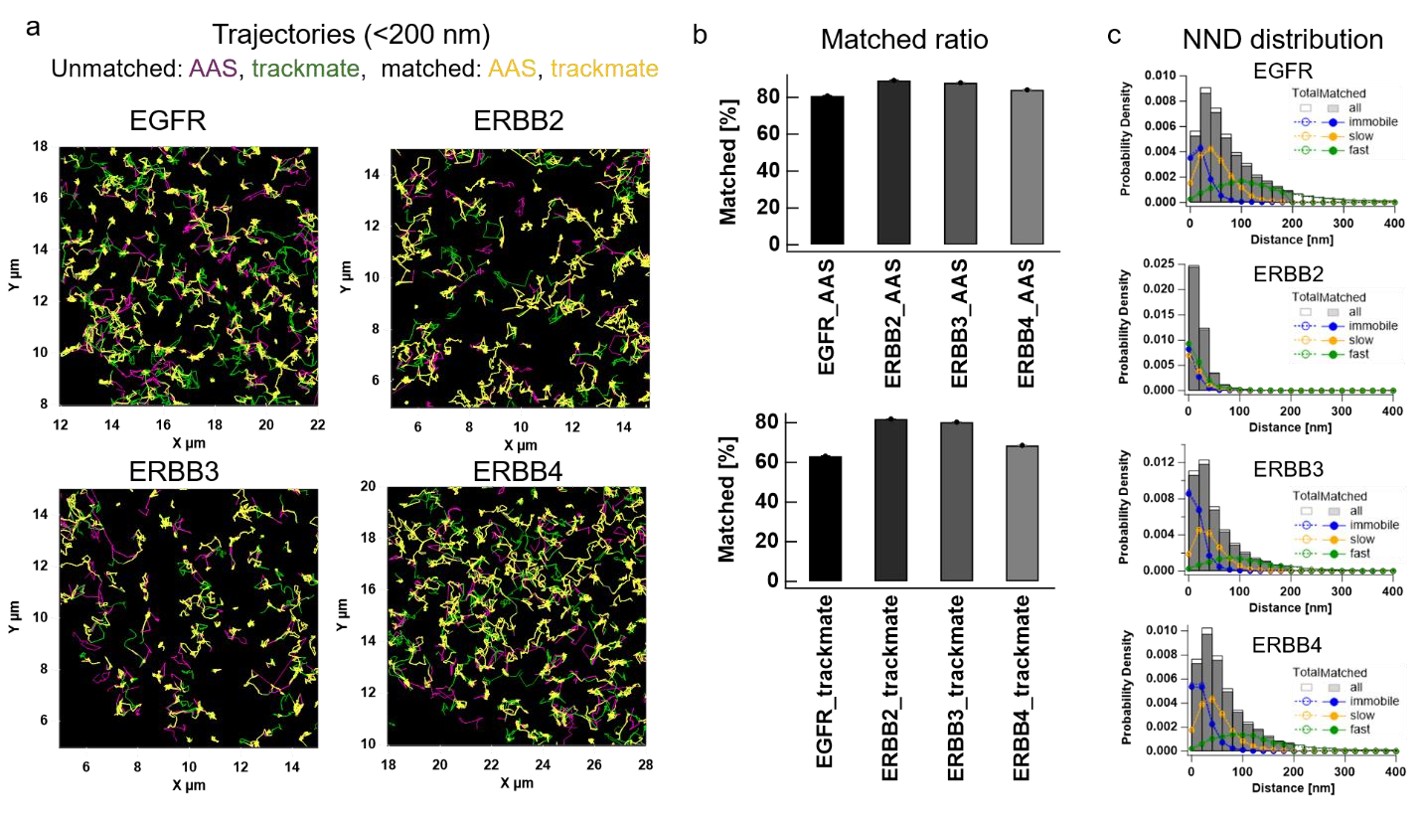
To validate the AAS results, we performed parallel analyses with Fiji TrackMate (Tinevez et al., Methods 2017) for the particle trajectories in the sample movies of EGFR families uploaded to the aforementioned GitHub. TrackMate-specific detection parameters were set to Grid = 5 × 5 pix, Diameter = 9 pix, Quality = 20. The gap in the TrackMate trajectories was filled by linear interpolation as employed in AAS. Subsequently, we applied VB-HMM analysis to the results of TrackMate using AAS and found that the three-state model was the most suitable for all four movies. The results are shown in the below figure.
The coincidence of the single-particle trajectories and the mobility parameters between the results of AAS and TrackMate was compared using smDA (Igor Pro; https://github.com/yanagawamasataka5z-oss/smDA-Igor).
If we define matched particle positions between the results of two algorithms as those detected within 200-nm distance in the same movie frame (Author response image 1a), the mean matched ratios from AAS to TrackMate and from TrackMate to AAS were ~80% and ~70%, respectively (Author response image 1b). This difference in the matched ratios indicates that TrackMate detected a greater number of particle steps than AAS. The distributions of distances between matched particle positions (Matched) and between all nearest particle positions (in the same movie frame) in the trajectories containing at least one matched position (Total) are shown in Author response image 1c. As demonstrated in these histograms, the differences in particle positions exhibited a peak at 20-40 nm or less. The differences were more pronounced in the fast mobile state.
Author response image 1.
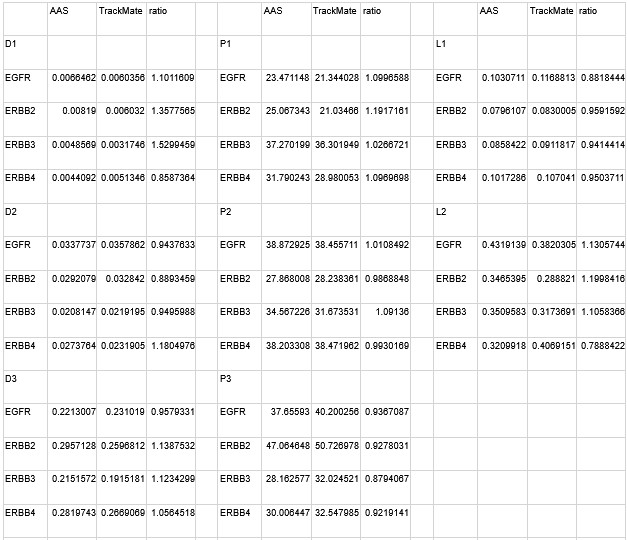
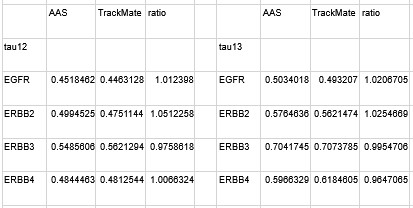
The values of the mobility parameters (D, P, L, tau) are listed in Author response tables 1-4. In general, the discrepancy between the parameter values of AAS and TrackMate was ~10% or less, with the exception of D1 (diffusion coefficient for immobile state). The substantial discrepancy in D1 is likely attributable to the small step sizes, which are commensurate with the spatial precision.
Author response table 1.
Author response table 2.
Author response table 3.
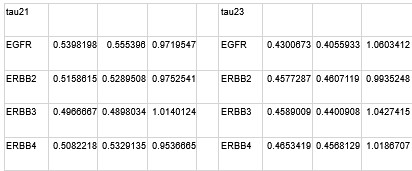
Author response table 4.
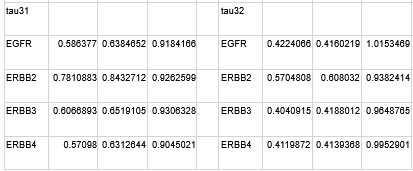
The tracking results for these four movies have been deposited on GitHub. We note that AAS performs a full 2D Gaussian fit with a tilted-plane background at every spot. This process provides quantitative Imax, Iback, and per-spot PSF widths (σx, σy) that are required for the parameter set I and F used in this study. TrackMate's Laplacian of Gaussian-based detection does not produce equivalent quantities.
Since the method of single-particle tracking is not the subject of this study, we do not think it is indispensable to show these data in the manuscript.
b. The trajectory information of single particles from the Zido AAS are not available. While the raw movies may be voluminous in nature, the extracted trajectories would also be valuable. As multiple hidden Markov models are available to evaluate diffusive behaviors, it would be useful to have the trajectory information available for a comparison between distinct models to be conducted by reviewers.
We uploaded CSV files to GitHub (https://github.com/yanagawamasataka5z-oss/smDA-Igor) showing the trajectories and changes in signal intensity of single particles derived from the sample movies. These files involve the state assignments in HMM with 1 (Model 1) to 5 (Model 5) mobility states.
c. The Variational Bayesian-Hidden Markov Model (Hiroshima et al. 2018) that is used at the core of this paper is not readily available.
We used a variational Bayesian inference methods for HMM composed in AAS. Since it is commercial we cannot distribute AAS. As long as we recognized, the method based on standard algorithm of VB-EM HMM for SPT (Hiroshima et al. 2018; Yanagawa et al. 2018; Persson et al. 2013).
We have added “VB-HMM analysis” section in the Supplement text. Here, we do not repeat explanation of the method shown in textbooks but described the special details of the algorithm which have a variation between implementations with the parameter values and model selection. One can reproduce our result from these lines of information based on the standard VB-HMM algorithm in textbooks.
Results of HMM analysis for the sample trajectories are shown in the csv files uploaded in GitHub (https://github.com/yanagawamasataka5z-oss/smDA-Igor). Results from the trajectories detected using TrackMate are also uploaded.
(2) While it is appreciated that the authors combine their extracted VB-HMM parameters of RTKs to other bioinformatic data sets, the relationship to functional and structural-sequence information is only correlative. There is no attempt in this article to validate the correlative findings.
There are very few instances of high correlation coefficients between individual parameters in different categories (behavior, structure, and function). Because there are so many parameters, these high correlations may be the result of statistical fluctuation (multiple testing). Therefore, we avoided drawing conclusions based on a simple correlation (text l.184-186; l.245-248; l.300-302; l.315-318, l.326-328). Consequently, we did not conduct any validation. One evolutionary parameter (EG1) may correlate significantly with the RTK function (text l. 270-273). However, we do not emphasize the importance of this result. Since EG1 indicates the EGFR family, a typical RTK family for regulating cell proliferation, this result may be obvious.
Regarding the validation of pR in multiple regression models for the function, first, please note that the distributions of pR values in the models for various cell lines are often clearly biased toward positive or negative (see Figs. 3B, D and 4B, F). This suggests that these pR values were not randomly determined, but rather, there was a high degree of commonality in the pR values among the models (i.e., among the parameters' roles). However, since variation among the models cannot be ignored, we based our discussion on the major parameters (average |pR| > 0.2 or 0.1) in the statistically significant (p < 0.1) models and the parameters highly correlated with them (but removed to avoid multicollinearity) (Figs. 3 and 4; Supplement text “Parameter selection for multivariate analyses”). Given the large number of models (cell species), the sign bias of the pR values is clearly statistically significant. Furthermore, this bias is not only common in models with high explanatory power (p < 0.1) but also in the pR distributions for all models, as seen in Table 2 and Supplement Table S8A, B. To clarify these points, we colored the cells in the above tables to indicate pRs with large absolute values.
Additionally, we validated the pR significance levels based on t-test (Tables 2, 4, and Supplement Table S8). Many of the pR values satisfy the p < 0.05 criterion for the parameters that were considered important in the models. Regarding the models for PC1 of the CRISPR factor (Fig. 6), we have indicated the 95% confidence intervals for Rs in the revised figure.
(3) Many statistical comparisons are made in this article across cell lines, RTKs, and parameters, but it is not clear if multiple comparison corrections are applied to compensate for the false discovery rate. The authors should provide a detailed Statistical Analysis section in the methods section.
As noted above, we did not use simple correlation coefficient (R) in our discussion due to the risk of multiple comparisons. A multiple regression model involves a single target variable vector and multiple explanatory variable vectors. Although the problem of multiple comparisons does not arise in the multiple regression modeling, multicollinearity among the explanatory variables may occur. To avoid this issue, we reduced the number of explanatory parameters by identifying combinations of highly correlated variables (Figs. 3A, C and 4A and Supplement text “Parameter selection for multivariate analyses”).
For multiple regression model and CCA, we added detailed explanations in Supplement text l.261-265 and text l.558-567.
Minor comments:
(1) The authors insufficiently cite the Broad Institute's Dependency Map project from which their functional analysis is derived. The following is quoted from https://depmap.org/portal/data_page/?tab=overview#how-to-cite .
For DepMap Release data, including CRISPR Screens, PRISM Drug Screens, Copy Number, Mutation, Expression, and Fusions:
DepMap, Broad (2025). DepMap Public 25Q3. Dataset. depmap.org
Please note, you may need to update the release quarter depending on which version of the data you are using.
We ask that you also cite the DepMap program:
Arafeh, R., Shibue, T., Dempster, J.M. et al. The present and future of the Cancer Dependency Map. Nat Rev Cancer 25, 59-73 (2025). https://doi.org/10.1038/s41568-024-00763-x
We have corrected the citation for DepMap (text l.581) and cited Arafeh et al. (text l.575-576). Thank you for pointing this out.
Reviewer #1 (Significance):
General assessment: The main significance of this paper comes from a broad and data-rich study of 52 of 58 human receptor tyrosine kinases. If this data, the intermediate analysis results such as the trajectories, or executable software used to conduct the analysis were made available, the value to the field would be high. However, the article lacks any statements regarding open availability of the data or the software. While correlating their "behavioral" parameters to other bioinformatic datasets creates context and suggests further studies, the lack of any validation of the correlative findings limits the significance of the results.
Advance: While the authors share large final outputs of their parameter datasets, the unavailability of the raw data or intermediate results makes it difficult to compare their analysis and models to other readily available analysis pipelines or models. In particularly, it would be useful to the field if their analysis could be directly compared to the software packages in the following citations:
(1) Monnier, N., Barry, Z., Park, H. et al. Inferring transient particle transport dynamics in live cells. Nat Methods 12, 838-840 (2015). https://doi.org/10.1038/nmeth.3483
(2) Vega et al., Biophys. J. 2018. Multistep Track Segmentation and Motion Classification for Transient Mobility Analysis. https://pubmed.ncbi.nlm.nih.gov/29539390/.
Audience: The potential audience is the field of receptor tyrosine kinases and more generally cell surface receptors. The lack of validation of their correlative results or comparison of their analysis pipeline to other analysis pipelines limits the value of the findings to the field. There is also a potential audience for other authors of computational trajectory analysis software if the raw data or intermediate analysis results were available. The effective audience is thus limited to biophysicists or quantitative biologists capable of replicating the VB-HMM model for validation of the correlative results in falsifiable experiments.
Reviewer's Field of Expertise: I have a field of expertise in advanced microscopy, image analysis, single particle tracking, receptor tyrosine kinases, membrane biophysics, hidden Markov models, Bayesian analysis, and software engineering.
Reviewer #2 (Evidence, reproducibility and clarity):
In their manuscript entitled " Single-molecule behavior and cell-growth regulation in human RTKs" Abe et al. demonstrate automated single-particle tracking of 52 receptor tyrosine kinases (RTKs) in both resting state and upon stimulation with the respective ligands. The approach is based on transient transfection of cells with each RTK tagged with a Halo-tag, allowing for subsequent dye labeling and live cell video recording using TIRF microscopy. Subsequently, a seemingly commercial analysis software is used to then obtain particle trajectories from single molecule localizations and analyze their properties using a hidden Markov model. The authors have previously demonstrated pioneering work in the field of single-particle tracking with respect to automation (Yasui et al, 2018) and analysis (Yanagawa et al, 2021), and in this work they scale their approach up to characterize a broad set of RTKs. The resulting observations are a powerful demonstration of the benefits of SPT in general and significantly advance our understanding of the dynamics of RTKs as a class, beyond the most prominently studied candidate EGFR, as well as promising evolutionary insights.
Comments and questions:
(1) The authors picked 52 out 58 human RTKs. Why not all?
We were unable to obtain cDNA for five species, and one species did not express in cells. This point was mentioned in the “Materials and Methods” section, but we move it to the “Results” section (text l.100-101).
(2) In contrast to the above mentioned previous publications, here a seemingly commercial software package was used (AAS by Zido). The methods part is very short on the specific parameters that were used to i) localize particles (e.g. net gradient threshold) or ii) connect localizations into trajectories (step size, allowed dark frames, min. trajectory length). Similarly a clearer explanation of the HMM calculus would significantly help to better follow the analysis approach and parameter choice. Perhaps this reviewer has missed it, but why did the authors e.g. choose 3 states for HMM?
We have added a detailed explanation on the single-particle tracking method (Supplement text “Singleparticle tracking” section). The tracking parameters that the reviewer asked about were shown in this section
Supplement Figure S1 and Supplement Table S1 show model selection for the HMM. After comparing models with single to five state(s), we consistently chose the three-state model, which generally produced the highest lower bound (text l.115-l.122).
(3) The replicate experiment in Fig. S2 is appreciated, but what condition was repeated here? Also experimental details are missing: was it two repeats of: i) seeding cells in a dish, transfection, labeling, imaging? An image from cells from those repeats would be important to show, also to which degree the density of particles F varies, i.e. to which degree this is an unprecise experimental parameter itself as compared to biologically meaningful. This is especially as Fig. S2 does not contain any density comparison at all, whereas in the main figures it is indeed an experimental observable used.
The two experiments used essentially the same population of transfectants (text l.145-146). The population was divided and transferred into two separate wells and cultured overnight. Staining was performed in each well.
The ratios of the F-values from the two measurements are shown in Supplement Figure S2D (upper middle) and Supplement Table S3. Supplement Figure S2D indicates the ratios of the parameter values in the two measurements for 52 RTKs. The differences were less than twice.
The movies contain only one to three cells per field of view and exhibit significant variability in expression between cells. For this reason, they are not suitable for evaluating reproducibility and have been omitted.
(4) The density raises another issue. Some of the movies show extremely dense signal. Here the authors should explain how they deal with particles whose trajectories cross. This could lead to artificial dynamics and a supplementary figure showing that their analysis is robust toward varying densities (again suggesting to include a simulation) could be helpful
If trajectories intersect, our algorithm assigns the intersection point to the trajectory that was closer in the previous frame, and interrupts tracking of the more distant trajectory. Particles with fewer than 15 tracking frames are excluded from the analysis. (Supplement text “Single-particle tracking”)
Handling the intersection of trajectories is a challenging problem in single-particle tracking. Accurately assessing the impact of this issue is also difficult. Even with a sophisticated simulator, the results may not reflect reality because diffusion coefficients and clustering states change with time for a single particle, and particle distributions are non-random. Moreover, these factors are entangled in actual cells.
As an alternative and practical approach, we evaluated the correlation between the parameter values for particle mobility, D, L, P and tau, and the particle density (Supplement Table S9). The results are summarized in Supplement text “Dependence on the particle density” and Supplement Figure S4. It cannot be concluded that the density dependence of the measured values, and therefore, the trajectory intersections, significantly impacts the overall results of this study.
(5) Fig. 2C is a bit hard to understand since here localizations are colored based on their state but not from which trajectory they come. Do e.g. individual trajectories show various dynamic behaviors or are the trajectories not long enough to observe this?
Figure 2 has been revised to present examples of trajectories color-coded according to the mobility state.
(6) The evolutionary aspects could use further and simpler explanations to make this passage easier to grasp
We introduced evolutionary parameters because we expected them to reflect higher-order structural information that is difficult to parametrize directly (text l.265-267). From this perspective, the results of analyses suggested that higher-order structures regulate function through (or at least in correlation with) the response behaviors. This is based on the fact that evolutionary parameters explained function better than the structural parameters and explained the response dynamics better than the resting state dynamics. Additionally, the evolutionary models for function highly agreed with the response models. (text l.279l.281)
The introduction of evolutionary parameters naturally raises questions from a different perspective regarding how evolution relates to structure, behavior, and function. We believe the reviewer’s question pertains to this very point. Since we have only used simple evolutionary grouping, we cannot address this issue by delving deeply into the details of evolutionary processes. We provided some discussion on this issue in “RTK behavior influenced by evolution and structure” section in Discussion (text l.449-l.456). Our findings suggest that multiple mechanisms produce response behavior that transcends evolutionary specificities.
Reviewer #2 (Significance):
The manuscript by Abe et al. represents a significant advancement in the field of single-particle tracking (SPT) by scaling up recording 52 human receptor tyrosine kinases (RTKs), offering comprehensive insights into their dynamics beyond the traditionally studied EGFR. While the study demonstrates cutting edge single-particle tracking and provides promising evolutionary insights, it currently lacks certain methodological details that are essential for reproducibility, such as specific parameters used in particle localization and trajectory analysis. The exclusion of 6 out of 58 human RTKs without discussion also requires further explanation, but overall, the study fills a knowledge gap by providing a broad overview of RTK dynamics and their diffusion behavior. Overall, this work should have broad appeal to fields such as cell signaling as well as methods development in the area of single-particle tracking.
-

-

Note: This response was posted by the corresponding author to Review Commons. The content has not been altered except for formatting.
Learn more at Review Commons
Reply to the reviewers
The authors do not wish to provide a response at this time.
-
Note: This preprint has been reviewed by subject experts for Review Commons. Content has not been altered except for formatting.
Learn more at Review Commons
Referee #2
Evidence, reproducibility and clarity
In their manuscript entitled " Single-molecule behavior and cell-growth regulation in human RTKs" Abe et al. demonstrate automated single-particle tracking of 52 receptor tyrosine kinases (RTKs) in both resting state and upon stimulation with the respective ligands. The approach is based on transient transfection of cells with each RTK tagged with a Halo-tag, allowing for subsequent dye labeling and live cell video recording using TIRF microscopy. Subsequently, a seemingly commercial analysis software is used to then obtain particle trajectories from single molecule localizations and analyze their properties using a hidden Markov …
Note: This preprint has been reviewed by subject experts for Review Commons. Content has not been altered except for formatting.
Learn more at Review Commons
Referee #2
Evidence, reproducibility and clarity
In their manuscript entitled " Single-molecule behavior and cell-growth regulation in human RTKs" Abe et al. demonstrate automated single-particle tracking of 52 receptor tyrosine kinases (RTKs) in both resting state and upon stimulation with the respective ligands. The approach is based on transient transfection of cells with each RTK tagged with a Halo-tag, allowing for subsequent dye labeling and live cell video recording using TIRF microscopy. Subsequently, a seemingly commercial analysis software is used to then obtain particle trajectories from single molecule localizations and analyze their properties using a hidden Markov model. The authors have previously demonstrated pioneering work in the field of single-particle tracking with respect to automation (Yasui et al, 2018) and analysis (Yanagawa et al, 2021), and in this work they scale their approach up to characterize a broad set of RTKs. The resulting observations are a powerful demonstration of the benefits of SPT in general and significantly advance our understanding of the dynamics of RTKs as a class, beyond the most prominently studied candidate EGFR, as well as promising evolutionary insights.
Comments and questions:
- The authors picked 52 out 58 human RTKs. Why not all?
- In contrast to the above mentioned previous publications, here a seemingly commercial software package was used (AAS by Zido). The methods part is very short on the specific parameters that were used to i) localize particles (e.g. net gradient threshold) or ii) connect localizations into trajectories (step size, allowed dark frames, min. trajectory length). Similarly a clearer explanation of the HMM calculus would significantly help to better follow the analysis approach and parameter choice. Perhaps this reviewer has missed it, but why did the authors e.g. choose 3 states for HMM?
- The replicate experiment in Fig. S2 is appreciated, but what condition was repeated here? Also experimental details are missing: was it two repeats of: i) seeding cells in a dish, transfection, labeling, imaging? An image from cells from those repeats would be important to show, also to which degree the density of particles F varies, i.e. to which degree this is an unprecise experimental parameter itself as compared to biologically meaningful. This is especially as Fig. S2 does not contain any density comparison at all, whereas in the main figures it is indeed an experimental observable used.
- The density raises another issue. Some of the movies show extremely dense signal. Here the authors should explain how they deal with particles whose trajectories cross. This could lead to artificial dynamics and a supplementary figure showing that their analysis is robust toward varying densities (again suggesting to include a simulation) could be helpful
- Fig. 2C is a bit hard to understand since here localizations are colored based on their state but not from which trajectory they come. Do e.g. individual trajectories show various dynamic behaviors or are the trajectories not long enough to observe this?
- The evolutionary aspects could use further and simpler explanations to make this passage easier to grasp
Significance
The manuscript by Abe et al. represents a significant advancement in the field of single-particle tracking (SPT) by scaling up recording 52 human receptor tyrosine kinases (RTKs), offering comprehensive insights into their dynamics beyond the traditionally studied EGFR. While the study demonstrates cutting edge single-particle tracking and provides promising evolutionary insights, it currently lacks certain methodological details that are essential for reproducibility, such as specific parameters used in particle localization and trajectory analysis. The exclusion of 6 out of 58 human RTKs without discussion also requires further explanation, but overall, the study fills a knowledge gap by providing a broad overview of RTK dynamics and their diffusion behavior. Overall, this work should have broad appeal to fields such as cell signaling as well as methods development int the area of single-particle tracking.
-
Note: This preprint has been reviewed by subject experts for Review Commons. Content has not been altered except for formatting.
Learn more at Review Commons
Referee #1
Evidence, reproducibility and clarity
Summary: "Single-molecule behavior and cell-growth regulation in human RTKs" studies 52 of the 58 human receptor tyrosine kinases (RTKs) on the surface of live HEK293A cells using a Total Internal Reflection Fluoresence Microscope (TIRFM) system previously described in Watanabe et al. Single molecule tracking is conducted automated commercial Auto Analysis System (AAS; Zido) software followed by analysis in Python via scikit-learn. The analysis includes use of a Variational Bayesian-Hidden Markov Model (VB-HMM) described previously (Hiroshima, 2018). The VB-HMM analysis was used to characterize movement of RTKs with the authors …
Note: This preprint has been reviewed by subject experts for Review Commons. Content has not been altered except for formatting.
Learn more at Review Commons
Referee #1
Evidence, reproducibility and clarity
Summary: "Single-molecule behavior and cell-growth regulation in human RTKs" studies 52 of the 58 human receptor tyrosine kinases (RTKs) on the surface of live HEK293A cells using a Total Internal Reflection Fluoresence Microscope (TIRFM) system previously described in Watanabe et al. Single molecule tracking is conducted automated commercial Auto Analysis System (AAS; Zido) software followed by analysis in Python via scikit-learn. The analysis includes use of a Variational Bayesian-Hidden Markov Model (VB-HMM) described previously (Hiroshima, 2018). The VB-HMM analysis was used to characterize movement of RTKs with the authors concluding that the movement could be explained by the receptors transitioning between three states: immobile, slow, and fast. Single molecular transport parameters are then extracted from the analysis and averaged results are reported. How these parameters change after stimulation are then evaluated and compared. To relate the diffusion "behaviors" with biological function, the authors retrieve cell growth data from loss-of-function data in the DepMap project (Arafeh, 2025). By correlating selected parameters with the functional data, the authors find that behaviors in the resting and response states partially "explained their function". The authors then relate specific parameters through correlation to growth-inhibitory or growth-supporting signaling, amino acid sequence characteristics ("structural"), and evolutionary parameters. Additionally, the authors build a regression model to evaluate how their behavior parameters may predict RTK functional characteristics.
Major Comments:
The primary findings from this article are the extraction of parameters of a 3-state hidden Markov model from the analyzed single molecule trajectories of 52 RTKs. It is difficult to evaluate these primary findings since the raw data, the analysis software, the intermediate results, the hidden Markov model, and the Python analysis scripts are not readily available to the public or this reviewer. Thus the evaluation of the underlying software, applicability of the software to the problem, or reproducibility of the results from the data are not possible to evaluate. I encourage the authors to provide as much data and software available as possible even if under restricted licenses. a. The availability of raw single molecule movies from this study are not generally available and thus it is difficult possible to evaluate the efficacy of the Zido AAS software or compare to the tracks generated to other single molecule tracking software. While it is appreciated that a mosaic of the movies is made available as Supplemental Movies 1A through 1D, these are not in a form analyzable by other tracking software. Ideally, all the raw experimental data would be made available, but it might suffice if a single raw movie and its analysis were made available for direct evaluation. b. The trajectory information of single particles from the Zido AAS are not available. While the raw movies may be voluminous in nature, the extracted trajectories would also be valuable. As multiple hidden Markov models are available to evaluate diffusive behaviors, it would be useful to have the trajectory information available for a comparison between distinct models to be conducted by reviewers. c. The Variational Bayesian-Hidden Markov Model (Hiroshima et al. 2018) that is used at the core of this paper is not readily available.
While it is appreciated that the authors combine their extracted VB-HMM parameters of RTKs to other bioinformatic data sets, the relationship to functional and structural-sequence information is only correlative. There is no attempt in this article to validate the correlative findings.
Many statistical comparisons are made in this article across cell lines, RTKs, and parameters, but it is not clear if multiple comparison corrections are applied to compensate for the false discovery rate. The authors should provide a detailed Statistical Analysis section in the methods section.
Minor comments:
- The authors insufficiently cite the Broad Institute's Dependency Map project from which their functional analysis is derived. The following is quoted from https://depmap.org/portal/data_page/?tab=overview#how-to-cite . For DepMap Release data, including CRISPR Screens, PRISM Drug Screens, Copy Number, Mutation, Expression, and Fusions: DepMap, Broad (2025). DepMap Public 25Q3. Dataset. depmap.org Please note, you may need to update the release quarter depending on which version of the data you are using. We ask that you also cite the DepMap program: Arafeh, R., Shibue, T., Dempster, J.M. et al. The present and future of the Cancer Dependency Map. Nat Rev Cancer 25, 59-73 (2025). https://doi.org/10.1038/s41568-024-00763-x
Significance
General assessment: The main significance of this paper comes from a broad and data-rich study of 52 of 58 human receptor tyrosine kinases. If this data, the intermediate analysis results such as the trajectories, or executable software used to conduct the analysis were made available, the value to the field would be high. However, the article lacks any statements regarding open availability of the data or the software. While correlating their "behavioral" parameters to other bioinformatic datasets creates context and suggests further studies, the lack of any validation of the correlative findings limits the significance of the results.
Advance: While the authors share large final outputs of their parameter datasets, the unavailability of the raw data or intermediate results makes it difficult to compare their analysis and models to other readily available analysis pipelines or models. In particularly, it would be useful to the field if their analysis could be directly compared to the software packages in the following citations:
- Monnier, N., Barry, Z., Park, H. et al. Inferring transient particle transport dynamics in live cells. Nat Methods 12, 838-840 (2015). https://doi.org/10.1038/nmeth.3483
- Vega et al., Biophys. J. 2018. Multistep Track Segmentation and Motion Classification for Transient Mobility Analysis. https://pubmed.ncbi.nlm.nih.gov/29539390/.
Audience: The potential audience is the field of receptor tyrosine kinases and more generally cell surface receptors. The lack of validation of their correlative results or comparison of their analysis pipeline to other analysis pipelines limits the value of the findings to the field. There is also a potential audience for other authors of computational trajectory analysis software if the raw data or intermediate analysis results were available. The effective audience is thus limited to biophysicists or quantitative biologists capable of replicating the VB-HMM model for validation of the correlative results in falsifiable experiments.
Reviewer's Field of Expertise: I have a field of expertise in advanced microscopy, image analysis, single particle tracking, receptor tyrosine kinases, membrane biophysics, hidden Markov models, Bayesian analysis, and software engineering.
-
-